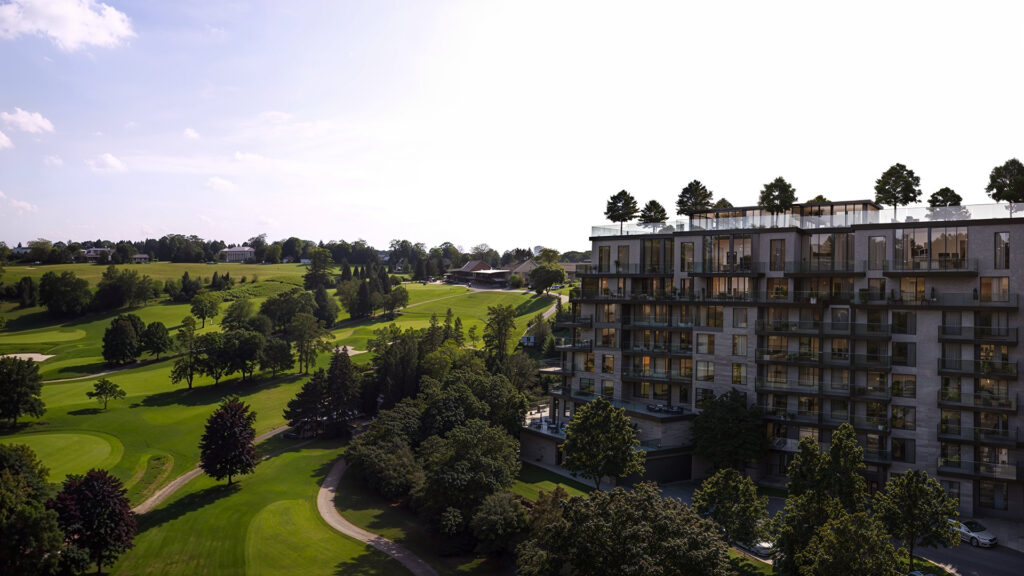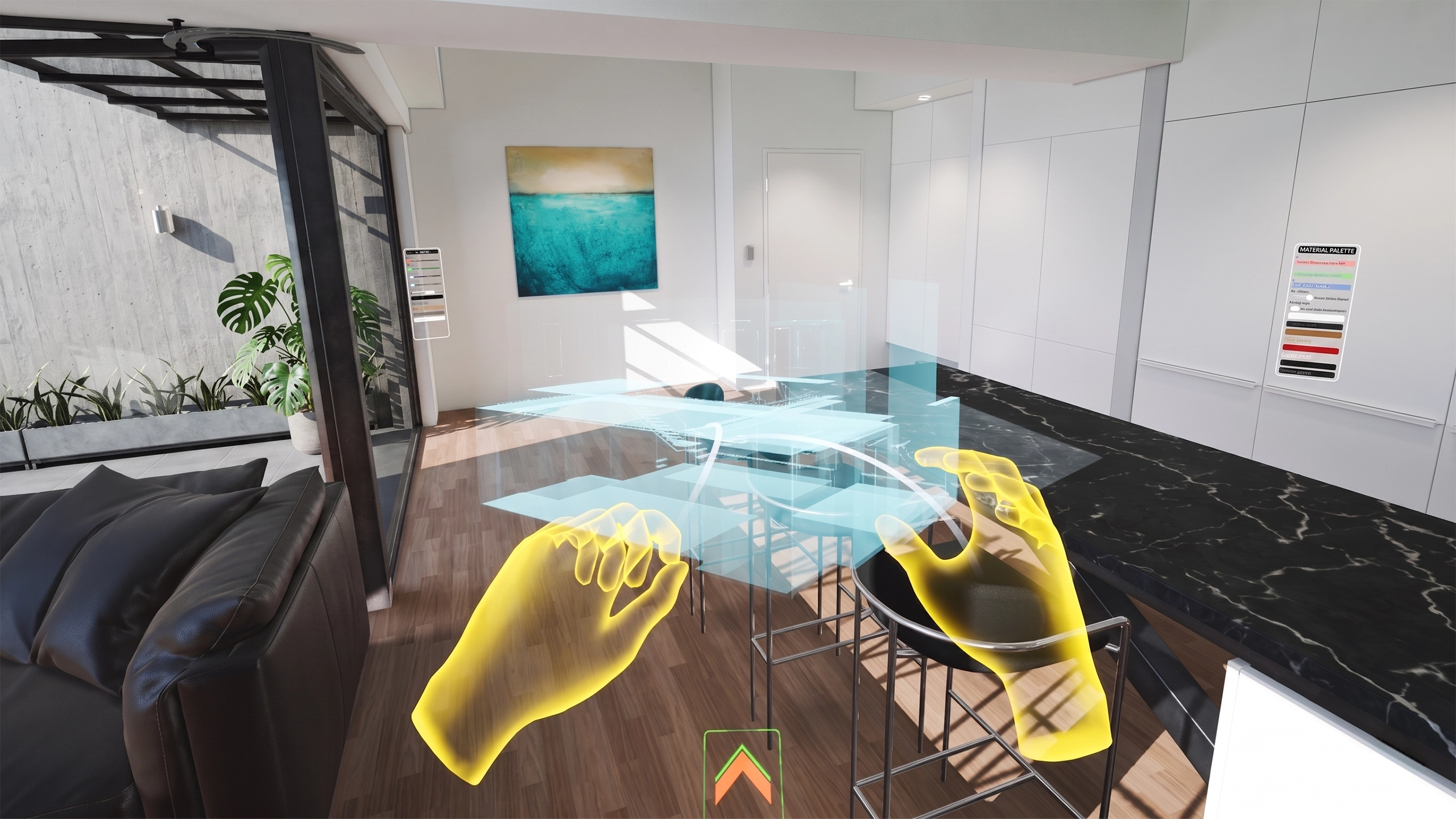
Next-Gen Interactive ArchViz | UE5 + Meta Interaction SDK Demo
Virtual Reality
Here are some of the benefits of interactive real-time architecture
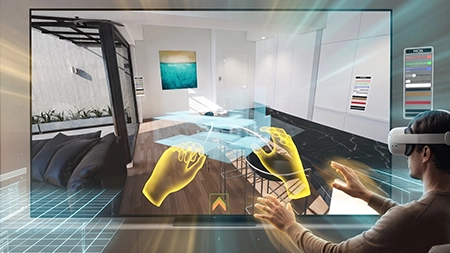
Immersive experiences
Users can explore and navigate through virtual spaces, gaining a better sense of scale, proportion, and spatial relationships.
Real-time Design Evaluation
Quick and iterative design changes, allowing for better decision-making and refinement of the architectural elements.
Design Simulation
Architects can simulate various environmental conditions, such as lighting, acoustics, and material finishes, in a virtual environment.
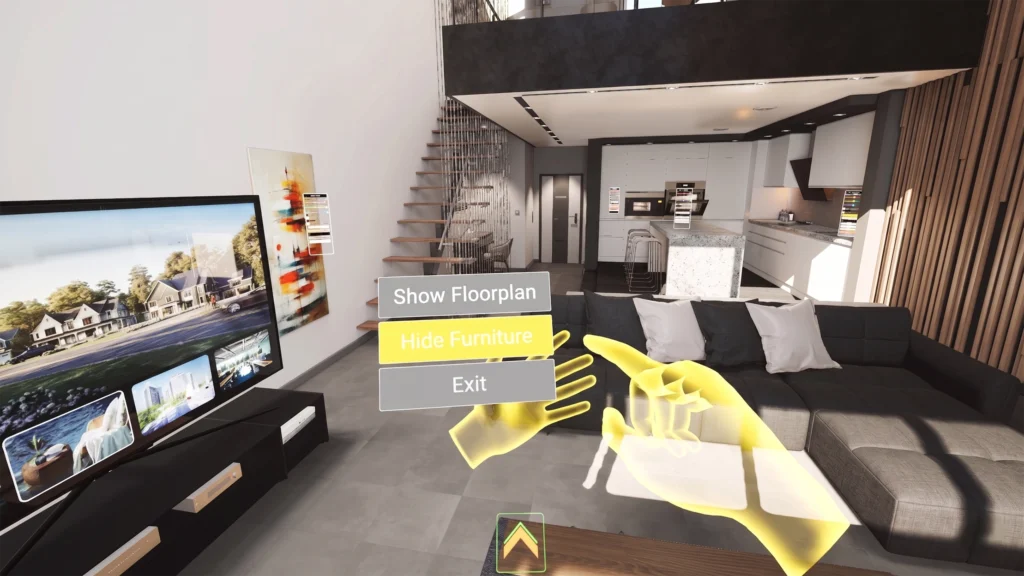
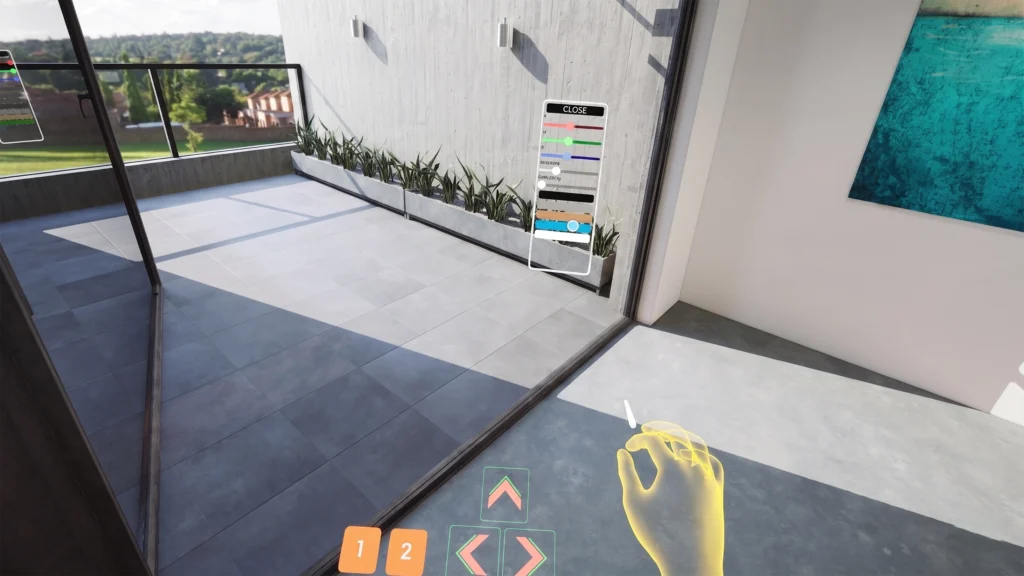

Expanded Features
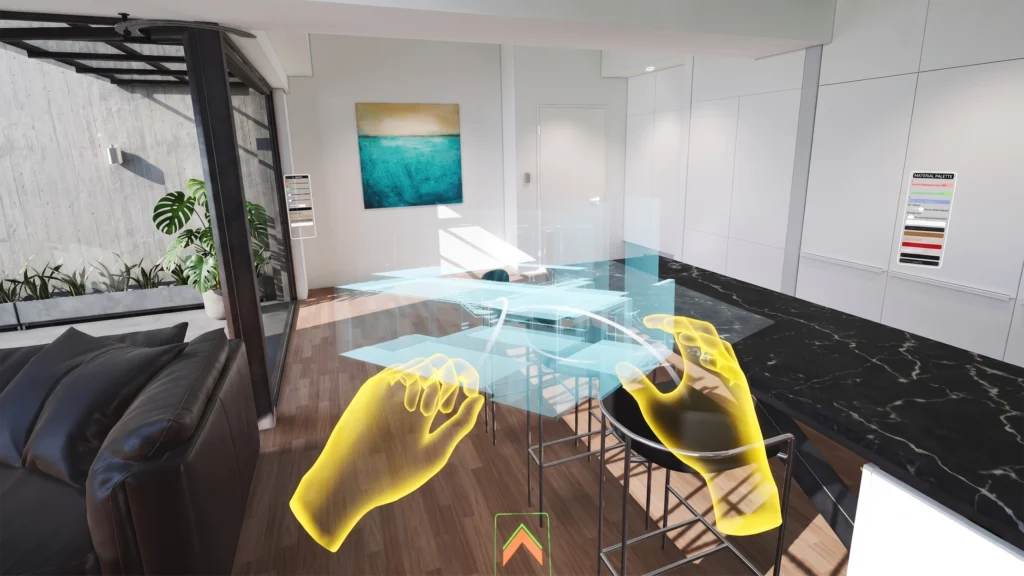
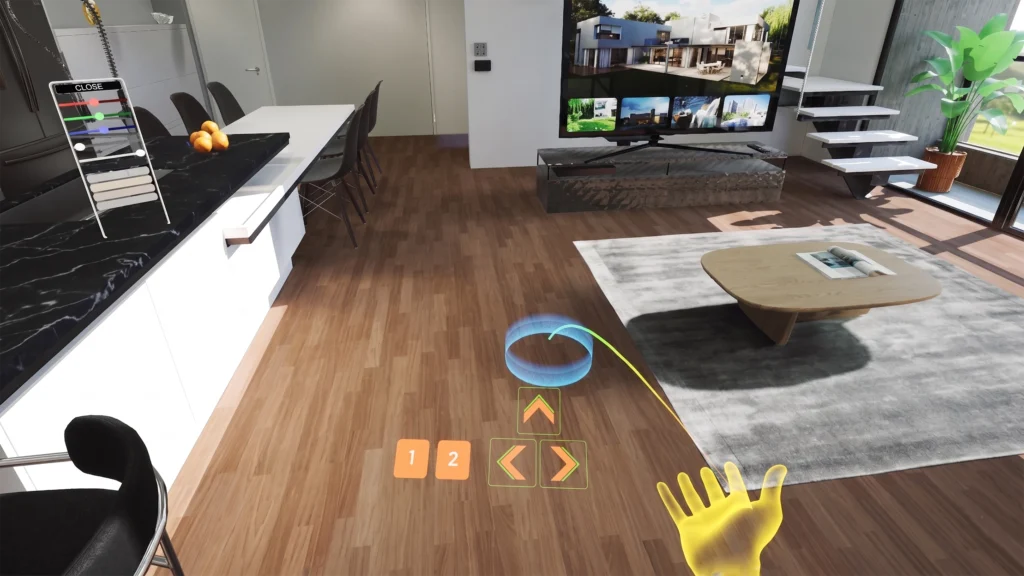
Natural Hand Tracking
Interact with the environment using your hands—no controllers required.Interactive Spatial UI
Navigate through custom 2D panels and menus distributed in the virtual space.Physics-Based Interaction
Open doors, move furniture, and feel the scale with realistic object manipulation.High-End Performance
Optimized for NVIDIA RTX series to ensure a smooth, immersive 90 FPS experience.